
Cracks start below the surface, not on it. Concrete cracks when the soil under it moves. It also cracks when shrinkage stress has nowhere to go, and pavers settle when water softens a thin base. A concrete contractor who rushes the base leaves that problem for your first wet winter. For that reason, our crew starts with grade, drainage and compaction. Then we pour the slab or lay the pavers you chose. Poured concrete suits driveways, walkways and pads that need one firm surface. Interlocking pavers suit areas where soil shifts, because single units can be lifted and reset. A typical slab is about 4 inches thick, and pavers sit on about 4 inches of compacted aggregate. So we plan the base before we talk about color or pattern.
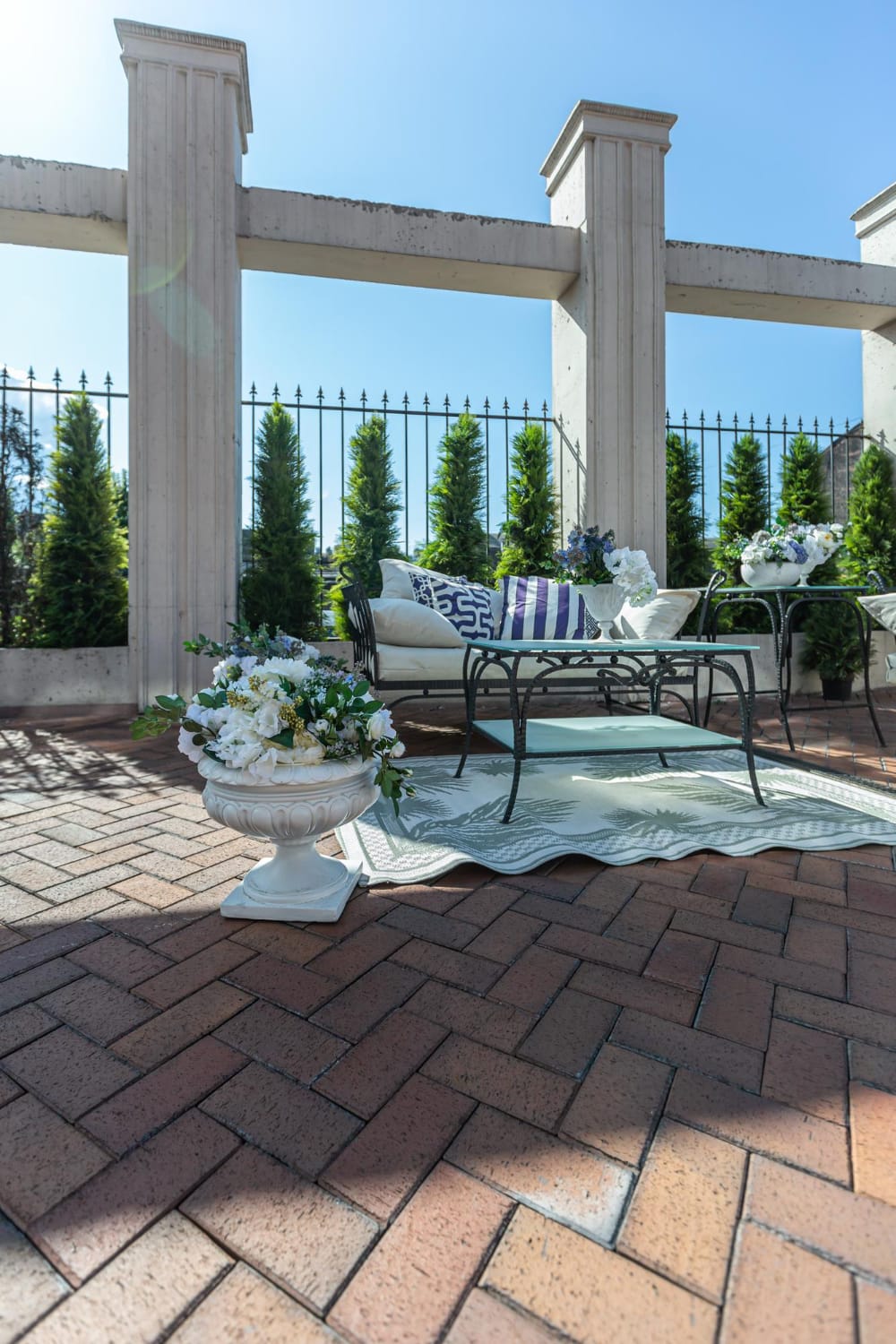
A good concrete contractor picks the material after walking the site, because the right choice depends on load, soil and how you use the space.

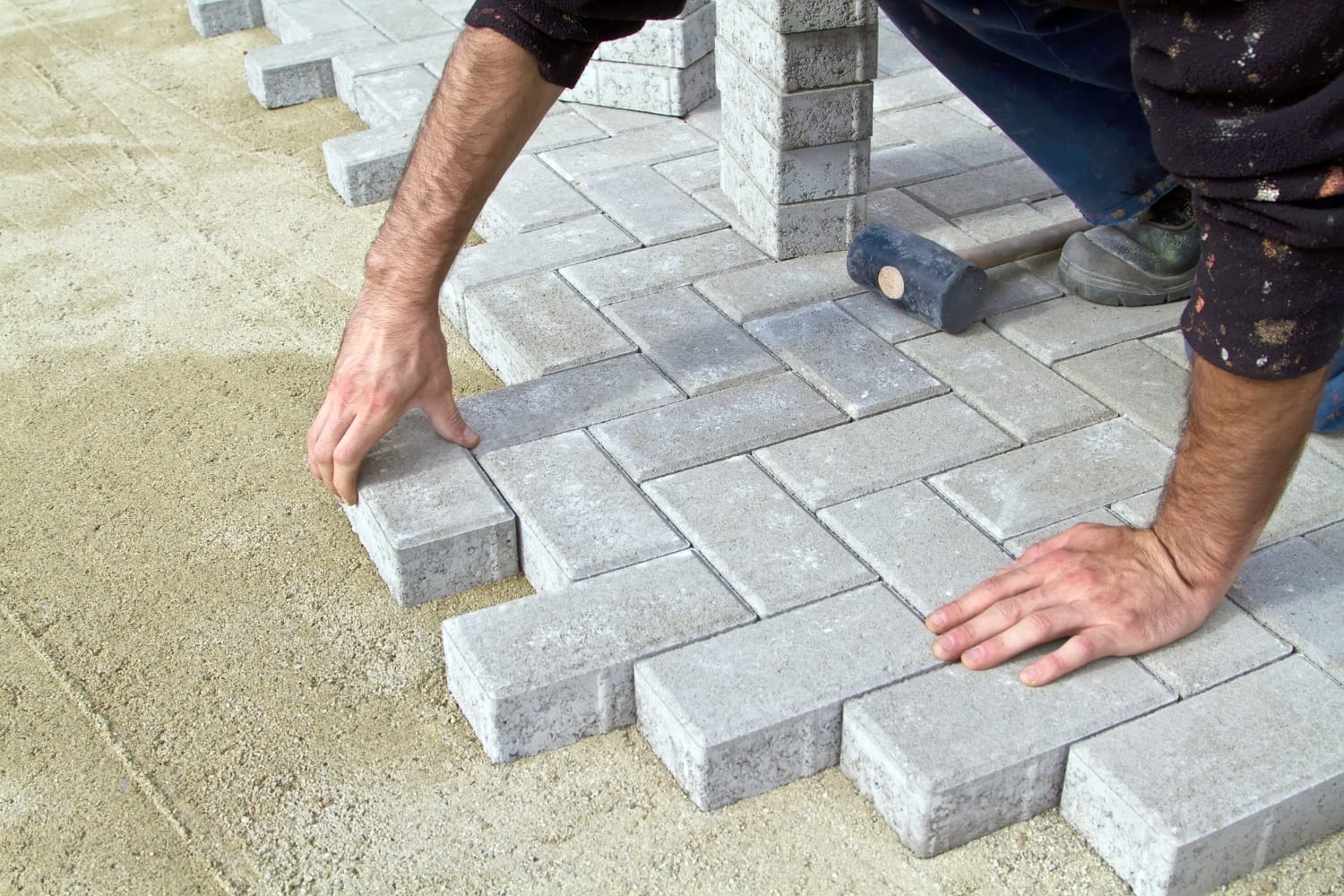
Interlocking pavers on a compacted base, edged so the rows cannot spread under tires or foot traffic.
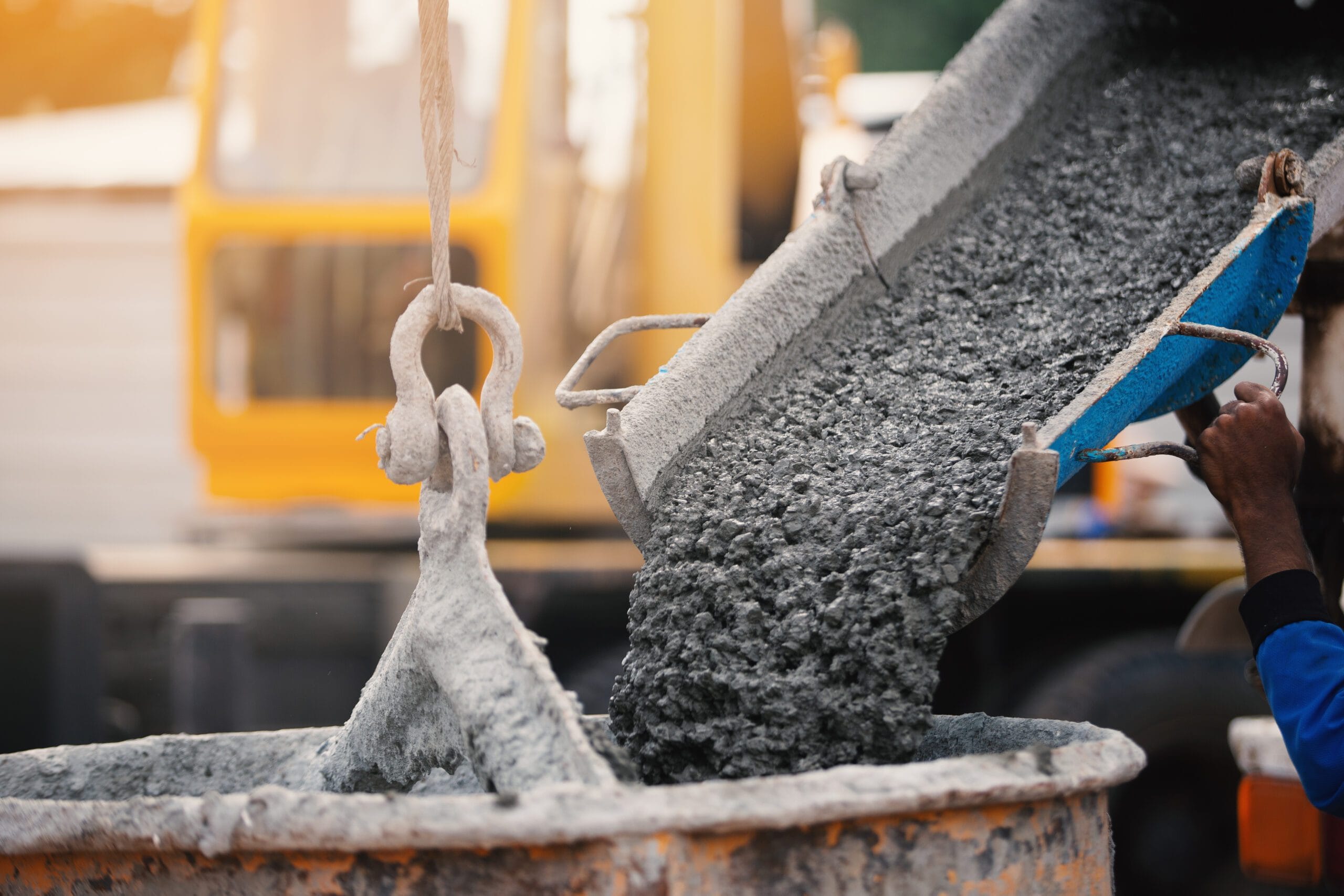
Slabs poured on a compacted base with control joints, so any crack follows the cut and not the middle.
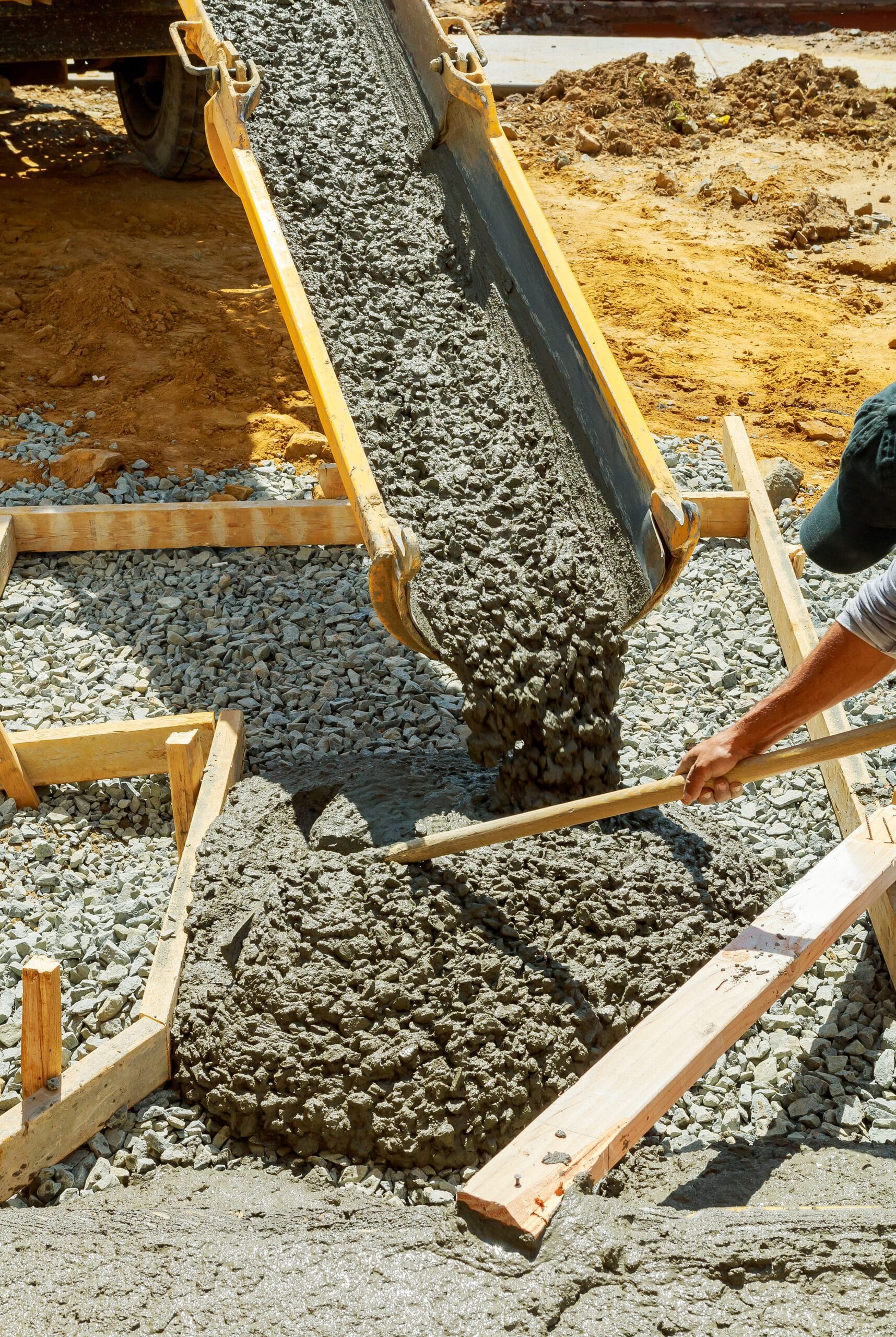
Formed, poured and broom finished for grip, then sloped so water leaves the surface.
A patio in one material or two, such as pavers with a concrete border, sloped away from the house.
Four things we do the same way on every slab and paver job.
A slab or paver surface needs about 4 inches of compacted aggregate on firm soil. Our concrete contractor crew compacts in layers and checks depth with a string line before forms go up or the first paver goes down.

Concrete shrinks as it cures, so it will crack somewhere. We cut joints about every 8 to 12 feet on a 4 inch slab, which gives that crack a straight path. Rebar or wire mesh is chosen for the load.
Driveways, walks and patios need a slope of about 1/4 inch per foot away from the house. Standing water stains the surface and softens the base. We check the fall with a level before the finish goes on.
Fresh concrete gains strength while it stays damp, so we protect it for the first days. Pavers get joint sand swept in and a sealer if you want one. Our concrete contractor crew tells you when it can take foot and vehicle traffic.
Five reviews from our clients, unedited: solar, financing, roofing and electrical work.
Exceptional service! The team at Majestic went above and beyond to install my solar panels. Couldn’t be happier with the results.
Majestic truly exceeded my expectations. Their solar financing options made it easy for me to go green without breaking the bank.
Highly recommend Majestic for their professionalism and expertise. They did an outstanding job with my roofing installation.
Impressed by their attention to detail and efficiency. The electrical panel service they provided was top-notch. Will definitely use them again!
I had my home rewired by Majestic and couldn’t be more pleased with the results. The team was courteous, knowledgeable, and efficient.
Tell us what you want to build: a driveway, a walkway, a patio or a fix for a slab that has cracked. We’ll come out, measure and look at slope and drainage. Then our concrete contractor crew tells you which material and base make sense.
The fastest way to book is a call or an email. Tell us your address, what you want built and a good time to reach you.
Concrete is strong when squeezed and weak when pulled, so it cracks when soil settles under it or when shrinkage has nowhere to go. A 4 inch slab sits on about 4 inches of compacted base, and saw cuts about one quarter of the slab depth give the crack a planned path. Clay soil swells and shrinks as it wets and dries, so a thin base moves with it. Pavers handle that movement differently. They lock together through joint sand and rigid edge restraints, which lets the surface flex without opening gaps. Rushed compaction leaves voids that settle later. The Interlocking Concrete Pavement Institute publishes industry guidance on base and joint standards. Our hardscaping page covers other outdoor surfaces.
A concrete job runs in four stages, and each one ends with a check. First, we walk the site, measure and mark where water flows, because slope drives every other choice. Next, we excavate, compact the base and set the forms or edge restraints. Then we pour, screed and finish the concrete and cut joints, or we lay the pavers and compact them. Last, we cure or sweep in joint sand, test drainage with a hose and walk the finished work with you. If the yard also needs walls or steps, our hardscape contractor crew can plan them together. For gates and boundaries, see our fencing work. Ready to see what fits your property? Book a free concrete estimate and we will go over it with you.
A concrete contractor builds the poured surfaces around a home, such as driveways, walkways, patios and pads. The work starts with a walk of the site, because slope and soil decide how each slab gets built. After that, the crew excavates, compacts a base, sets forms, pours and finishes the concrete, and cuts joints. A good slab is mostly hidden. The base, the joints and the drainage do the work, and the surface only shows it. For that reason, we explain each layer during your free estimate. You then know what your money buys before work starts.
Ask four things. First, ask how the crew prepares the base, because that decides whether a slab stays flat. Second, ask where the control joints go and how water leaves the surface. Third, ask for a written scope that lists thickness, reinforcement, finish and cleanup. Fourth, look up the contractor’s record with the California Contractors State License Board, since a license is a public record. We are glad to answer all four at your free estimate. Also compare scopes line by line, because the lowest number often leaves out base work.
It depends on budget, look and how the ground moves. Poured concrete is smooth and firm, though it can crack where soil shifts, and a crack is hard to hide. Interlocking pavers flex slightly, so a single unit can be lifted and reset if the base settles. Pavers also give more pattern and color choices. As a result, many properties mix the two, such as a concrete drive with a paver border. During your estimate, we compare both options for your slope and soil. Then we explain the trade-offs in plain terms, including the loads the driveway has to carry.
You cannot stop concrete from shrinking, but you can control where it cracks. First, compact the base so the slab sits on firm, even soil. Second, cut control joints about every 8 to 12 feet on a 4 inch slab. That way, stress relieves along a straight line. Third, add rebar or wire mesh where the load calls for it. Fourth, keep the surface damp while it cures, because rapid drying causes surface cracks. A concrete contractor who skips any of these steps usually leaves cracks in random places. We explain which steps your project needs.
Paver installation time depends on size, access, excavation depth and weather. A small walkway goes faster than a full driveway, because a driveway needs more excavation and a deeper base. Rain pauses the work, since a wet base cannot be compacted properly. For that reason, we plan around the forecast and not only the calendar. After your estimate, we give you a working schedule, so you know what to expect before you sign. If we hit rock, buried roots or an unmarked line while digging, we tell you right away. We then explain what changes for the schedule.
Fresh concrete needs time to gain strength, and the cure depends on temperature and mix. As a general rule, people can walk on it after about a day or two. Vehicles wait about a week, and heavy trucks wait longer. We tell you the dates for your pour, since a warm dry week cures faster than a cool damp one. Keep sprinklers, pets and bikes off the surface until we say it is ready. Paver surfaces can take traffic sooner, once the joint sand is swept in and compacted. Ask us for the plan that fits your job.
Five things drive cost: the area, the material, the thickness or base depth, the access and the amount of excavation. A driveway that needs 8 inches of base costs more than one that needs 4. The crew moves and compacts more stone. Stamped or colored finishes cost more than a plain broom finish, and a tight side yard slows the work compared with an open one. We do not guess prices over the phone. Instead, we measure the site during your free estimate, then explain what each part of the quote covers. That way, you can compare our scope with any other bid.
It depends on the work and the city or county. A driveway apron that meets the street often needs a permit, since it sits in the public right of way. On your own lot, a flat patio usually needs less, but walls, steps and grade changes can trigger rules. Our concrete contractor crew confirms what applies to your address before work starts. Whatever the rules, we call for utility marking before any excavation, because buried lines sit where you want to dig. Ask us what applies to your property, and we will tell you which approvals to expect and who files them.
Our concrete contractor crew works across Northern California from offices in Lincoln and Oakland. That covers the Sacramento region and the East Bay, plus many towns between them. Because travel time affects scheduling, we confirm your address before we book a visit. Call (916) 580-5092 or send an email with your address and what you want to build. We will tell you quickly whether we can take the project. If your lot sits on a steep slope or near a creek, mention that in your message. Those details change the base, the drainage and the permit path, so we plan for them early.